
Earnings season is one of the most exciting — and most dangerous — times to trade options. Stocks can gap up 15% or crash 20% overnight. Implied volatility spikes. Premiums swell. And traders who understand how to position themselves around earnings can find some of the highest-probability setups of the entire year.
But here’s the honest reality most beginners don’t hear: most earnings options trades lose money — not because the trader was wrong about direction, but because they didn’t understand how options are priced before and after an earnings event.
This guide covers the best options strategies for earnings, explains why each one works or doesn’t, and helps you choose the right approach based on your risk tolerance and market outlook.
What Makes Earnings Different From Normal Trading Days?
Before picking a strategy, you need to understand the unique dynamics of options around earnings announcements.
Implied volatility spikes before earnings. In the days leading up to an earnings report, options become expensive. Market makers price in the expectation of a big move by inflating implied volatility. This is called the earnings premium — and it means calls and puts both cost more than they normally would.
IV crush happens after earnings. Once the earnings report drops, the uncertainty is resolved. Whether the stock goes up, down, or sideways, that uncertainty is gone. Implied volatility collapses — sometimes by 40-60% in a single session. This is IV crush, and it destroys the value of long options even when you’re right about direction. See our complete guide on What Is IV Crush.
The expected move tells you the breakeven. Options pricing tells you the market’s expected move for earnings. A simple way to calculate it: add the at-the-money call and at-the-money put prices for the nearest expiration after earnings. That sum is roughly what the market expects the stock to move in either direction. On a $100 stock with a $4 call and $4 put, the expected move is approximately ±$8.
Understanding the expected move is critical before choosing your strategy — it’s the number everything else gets measured against.
Strategy 1: The Iron Condor (Defined Risk, Defined Reward)
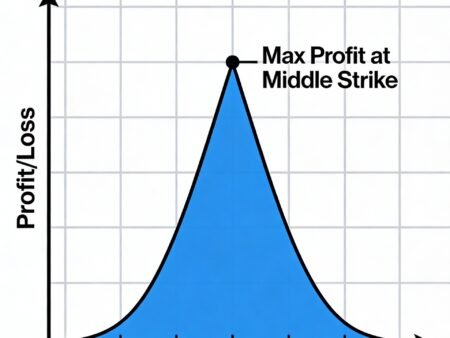
The iron condor is the most popular earnings strategy among retail options traders — and for good reason. It gives you all the benefits of selling elevated IV with a defined maximum loss you know before you enter the trade.
How it works: Sell an OTM call spread and an OTM put spread simultaneously. You collect a net credit. As long as the stock stays between your short strikes at expiration, you keep the full credit. Your maximum loss is capped by the long options you own as protection.
Example on a $100 stock:
- Sell $110 call / Buy $115 call → net credit of $1.50
- Sell $90 put / Buy $85 put → net credit of $1.50
- Total credit: $3.00
- Maximum profit: $300 per pair (stock stays between $90 and $110)
- Maximum loss: $200 per spread (spread width minus credit)
When it works: The stock stays within the expected move range — which it does more often than many traders expect. IV crush after earnings makes the options you sold worth significantly less, allowing you to close for profit or let them expire worthless.
When it fails: The stock makes an outsized move beyond one of your short strikes. The spread on that side approaches maximum loss.
The edge: Iron condors are the most balanced earnings approach for most retail traders because the risk is defined, the probability of success is quantifiable before entry, and you benefit directly from IV crush regardless of which direction the stock moves.
For a complete breakdown see our Iron Condor Strategy guide.
Strategy 2: The Short Strangle (Wider Breakevens, More Premium)
How it works: Sell an OTM call and OTM put around earnings without the protective long options of an iron condor. You collect more premium and have wider breakevens — but your risk is undefined if the stock makes a massive move.
Example on a $100 stock:
- Sell the $110 call for $2.00
- Sell the $90 put for $2.00
- Total credit: $4.00
- Breakeven range: $86 to $114
When it works: Same as the iron condor — stock stays within the expected move, IV crushes, positions decay to zero.
When it fails: A massive surprise move sends the stock far beyond one of your strikes. Unlike the iron condor, there’s no long option to cap your loss.
Who should use it: Experienced traders with clear stop-loss rules and a genuine understanding of margin requirements. Beginning and intermediate traders are better served by the iron condor’s defined risk structure.
For a complete breakdown see our Strangle Strategy guide.
Strategy 3: The Short Straddle (Maximum Premium, Tightest Range)
How it works: Sell both the ATM call and ATM put at the same strike with the same expiration. You collect maximum premium — but your breakeven range is tighter than a strangle and your risk is substantial if the stock makes a large move.
Example on a $100 stock:
- Sell the $100 call for $4.00
- Sell the $100 put for $4.00
- Total credit: $8.00
- Breakeven range: $92 to $108
When it works: The stock stays close to its pre-earnings price and IV collapses. The short straddle collects the most premium of any earnings selling strategy.
When it fails: Any meaningful move in either direction starts eating into profits. Large moves create large losses.
Who should use it: Experienced traders only. The short straddle is the most aggressive earnings selling strategy in this series — maximum reward, maximum risk.
Strategy 4: The Bull Call Spread (You’re Bullish)
How it works: Buy a call and sell a higher-strike call simultaneously, paying a net debit. You profit if the stock rallies past your long strike. The short call reduces your cost and offsets some of the IV crush on the long leg.
Example on a $100 stock:
- Buy the $100 call for $5.00
- Sell the $110 call for $2.00
- Net debit: $3.00
- Maximum profit: $7.00 (if stock closes above $110)
- Maximum loss: $3.00 (the debit paid)
Why it beats buying naked calls: Buying a naked $100 call for $5.00 before earnings exposes you to full IV crush — the option might fall to $2.00 even on a moderate rally. The spread costs less, reduces your Vega exposure, and often performs better than the naked call on a normal earnings beat.
When it works: The stock makes a strong move in your direction, past your short strike.
When it fails: The stock goes the wrong direction. You lose the full debit paid.
For a complete breakdown see our Credit Spreads vs Debit Spreads guide.
Strategy 5: The Bear Put Spread (You’re Bearish)
Same mechanics as the bull call spread — but for a bearish outlook. Buy a put and sell a lower-strike put for a net debit. You profit if the stock falls past your long strike.
Example on a $100 stock:
- Buy the $100 put for $4.50
- Sell the $90 put for $1.50
- Net debit: $3.00
- Maximum profit: $7.00 (if stock closes below $90)
- Maximum loss: $3.00
Use a bear put spread when you have strong directional conviction to the downside and want reduced cost and IV crush exposure compared to buying a naked put.
Strategy 6: The Long Straddle (Bet on a Big Move)
How it works: Buy both the ATM call and ATM put at the same strike, same expiration. You profit if the stock makes a large enough move in either direction.
The honest reality: This is one of the most common ways traders lose money on earnings. You’re buying options when IV is at its peak. The moment earnings drop and IV crush hits, the value of your options collapses — even if the stock moves significantly. The stock needs to move more than the expected move for a long straddle to be profitable.
When it can work: If you believe the stock will make a dramatically larger-than-expected move. This is sometimes the case with smaller, volatile stocks or situations with multiple simultaneous catalysts — earnings plus guidance plus an analyst day, for example.
The honest take: Most of the time, selling the expected move beats buying it. Long straddles on earnings are a specific bet that the market has underestimated the magnitude of the move — a bet that requires genuine edge to make consistently.
For a complete breakdown see our Straddle Strategy guide.
Comparing the Strategies
| Strategy | Outlook | Max Profit | Max Loss | IV Crush Effect |
|---|---|---|---|---|
| Iron Condor | Neutral / range-bound | Net credit | Defined | Benefits you |
| Short Strangle | Neutral / low move | Premium collected | Unlimited | Benefits you |
| Short Straddle | Neutral / very low move | Premium collected | Unlimited | Benefits you |
| Bull Call Spread | Bullish | Spread width minus debit | Debit paid | Partially hurts |
| Bear Put Spread | Bearish | Spread width minus debit | Debit paid | Partially hurts |
| Long Straddle | Big move either way | Unlimited | Debit paid | Hurts you |
How to Find Stocks With a History of Under-Moving on Earnings
This is where serious earnings traders separate themselves from casual ones. The goal isn’t to guess direction — it’s to find stocks where the market consistently overestimates the expected move. When the market prices in an 8% move and the stock historically moves 4-5%, selling premium has a structural statistical edge.
Step 1 — Look up the stock’s earnings history. Sites like Market Chameleon and Barchart track historical actual moves versus expected moves across dozens of earnings events. This data is free and takes two minutes to find.
Step 2 — Calculate the beat rate. If a stock has moved less than the expected move in 14 of its last 20 earnings — 70% of the time — that’s a strong signal that selling premium has historical edge on that specific name.
Step 3 — Check IV Rank. You want to sell options when IV is historically elevated, not just nominally high. A stock with 40% IV might be cheap if it normally runs at 60% before earnings. IV Rank on a 0-100 scale tells you where current IV sits relative to its 52-week range. Target IV Rank above 50 for selling strategies.
Step 4 — Confirm liquidity. Wide bid-ask spreads on options will eat your profits. Stick to stocks with high open interest and tight bid-ask spreads — large-cap names like AAPL, NVDA, AMZN, and MSFT are consistently liquid. Illiquid options are expensive to enter and exit regardless of the premium shown.
The Earnings Calendar: How to Plan Ahead
Earnings don’t sneak up on you if you’re prepared. Here’s a simple weekly workflow:
Each Sunday: Pull the earnings calendar for the week. Focus on stocks you know or already watch. Most brokers display the earnings calendar built into the platform — tastytrade, thinkorswim, and Power E*TRADE all show it prominently.
3 days before earnings: Check IV Rank. If IV Rank is above 50 — options are relatively expensive compared to historical norms — start modeling your trade. If IV Rank is below 30, premium is thin and the trade may not be worth the risk.
1-2 days before earnings: Enter your position. For iron condors and strangles, place your short strikes at or just outside the expected move. This gives you the statistical edge of selling at the widest reasonable range.
Day of earnings (after the announcement): Let IV crush work. If you’ve hit 50% of maximum profit within the first session, consider closing for a quick gain rather than holding to expiration.
Post-earnings: Review. Did the stock move more or less than expected? Log it. Over time, your own data on specific stocks becomes your edge — and you’ll start to recognize which names consistently under-move and which ones deliver surprises.
The #1 Mistake Traders Make on Earnings
Holding too long.
Most earnings trades work or fail within 24-48 hours of the announcement. If your iron condor is up 50% the morning after earnings, there is no good reason to hold through expiration. You’ve captured most of the IV crush benefit. The remaining potential profit is small relative to the risk of a random adverse move in the days to follow.
Professional options traders typically target 25-50% of maximum profit as their exit target on short premium earnings trades. They close, bank the gain, and move on to the next opportunity. The traders who hold to expiration hoping to squeeze out the last few dollars of profit are the same traders who occasionally watch a profitable position turn into a full loss when the stock makes an unexpected move in the final days.
Close early. Move on. Repeat.
A Simple Decision Framework
Before every earnings trade, answer these three questions:
Do you have directional conviction?
- Strong bullish view → Bull call spread
- Strong bearish view → Bear put spread
- No view on direction → Iron condor, short strangle, or short straddle
What is the IV environment?
- IV Rank above 50% → Selling strategies are advantaged — iron condor, strangle, straddle
- IV Rank below 30% → Options are relatively cheap — long straddle has more edge
- IV Rank between 30-50% → Either approach can work depending on conviction
What is your risk tolerance?
- Defined risk required → Iron condor (neutral) or vertical spread (directional)
- Comfortable with larger risk/reward → Short strangle or straddle
- New to earnings trades → Iron condor, every time
Timing: When to Enter and Exit
Entry for sellers: Enter 1-3 days before the announcement when IV is elevated but the stock hasn’t moved yet. Entering the morning of earnings means paying peak IV, which maximizes the crush risk.
Entry for buyers: Long straddles are best entered 2-4 weeks before earnings when IV is still rising but hasn’t reached peak levels. Entering the day before means paying maximum premium with minimum time for the trade to work.
Exit for all strategies: Most earnings options trades should be closed within the first session after the announcement. IV crush happens immediately. Set a clear exit plan — typically 50% of maximum profit — before you enter the trade, and execute it without hesitation.
Frequently Asked Questions About Earnings Options Strategies
What is the best options strategy for earnings?
For most retail traders the iron condor is the strongest starting point — defined risk, high probability of success when sized correctly, and direct exposure to IV crush. For traders with strong directional conviction, a vertical spread — bull call or bear put — reduces IV crush exposure compared to buying naked options. For experienced traders who want maximum premium, short strangles offer more income but undefined risk.
Should I buy or sell options before earnings?
In most cases, selling options before earnings has a statistical edge over buying. Implied volatility is inflated before earnings, and IV crush after the announcement reduces options values regardless of direction. Selling strategies — iron condors, strangles, credit spreads — are designed to profit from this dynamic. If you have strong directional conviction, a vertical spread reduces IV crush exposure compared to buying naked options.
Can you make money buying calls before earnings?
Yes — but the stock needs to move more than the expected move priced into the options. Even if you’re right about direction, IV crush can erase much of your gain on a moderate move. A bull call spread is almost always a better approach than a naked call — it reduces cost, offsets some IV crush through the short leg’s negative Vega, and often performs better on a normal earnings beat.
What is the safest options strategy for earnings?
The iron condor is the most risk-managed earnings strategy for most retail traders. Maximum loss is defined and known before you enter. You profit from IV crush and a stock staying within a range. It’s not risk-free — no options strategy is — but defined risk is the closest thing to safe in earnings options trading.
Is it better to trade options the day before or day of earnings?
Most earnings traders enter positions one to three days before the announcement when IV is elevated but the stock hasn’t moved yet. Entering the morning of earnings means paying peak IV, which maximizes IV crush risk. For selling strategies, earlier entry captures more premium.
What happens to options prices after earnings?
After earnings, implied volatility typically collapses sharply — a phenomenon called IV crush. This causes the time value portion of all options — both calls and puts — to fall significantly, often by 40-60%. Even if the stock moves in your favor, the drop in IV can dramatically reduce or eliminate your profit if you were long options. Short options positions like iron condors and strangles benefit from this collapse. See our complete guide on What Is IV Crush.
What stocks are best for options earnings plays?
The best stocks for earnings options strategies have high implied volatility before earnings, a history of moving less than the expected move, high options liquidity with tight bid-ask spreads, and predictable earnings patterns. Large-cap stocks like AAPL, AMZN, NVDA, and MSFT are popular because of their liquidity. Platforms like Market Chameleon and Barchart track historical earnings moves versus expected moves to help identify favorable setups.
How do I know if a stock tends to under-move on earnings?
Check the stock’s earnings history on Market Chameleon or Barchart — both track actual move versus expected move across multiple earnings events. A stock that has moved less than the expected move in 70%+ of its recent earnings reports is a strong candidate for selling premium. Combine this with IV Rank above 50 and high options liquidity for the best setup.
What is the #1 mistake traders make on earnings options?
Holding too long. Most earnings trades work or fail within 24-48 hours of the announcement. Traders who hold short premium positions through expiration hoping for the last few dollars of profit regularly watch profitable positions turn into losses from unexpected post-earnings moves. Target 25-50% of maximum profit as your exit threshold and close without hesitation when you hit it.