
Most people discover options trading through speculation — buying calls or puts hoping for a big move. But there’s a quieter, more consistent approach that professional traders and serious retail investors have used for decades: selling options to generate income.
The idea is straightforward. Instead of paying a premium hoping the stock moves your way, you collect a premium and let time work in your favor. Done properly, options income strategies can supplement or even replace other income streams — one trade, one expiration, one premium at a time.
This guide covers the three core income strategies, how they work, when to use them, and how to build a repeatable process around them.
Why Sell Options for Income?
When you buy an option, time is your enemy. Every day that passes without the stock moving in your direction, your option loses value — that’s Theta decay working against you.
When you sell an option, time becomes your ally. Every day that passes, the option you sold loses value — and that decay flows directly into your account as profit.
This is the core insight behind every income-based options strategy:
- The seller collects premium upfront
- Time decay works in the seller’s favor
- The trade profits if the stock stays within a range — it doesn’t have to move at all
The tradeoff is that selling options carries defined obligations. You’re taking on a responsibility in exchange for that premium. Understanding and managing that obligation is what separates disciplined income traders from those who get hurt.
The Three Core Income Strategies
1. Covered Calls
A covered call is the most widely used options income strategy — and the most appropriate starting point for anyone new to selling options.
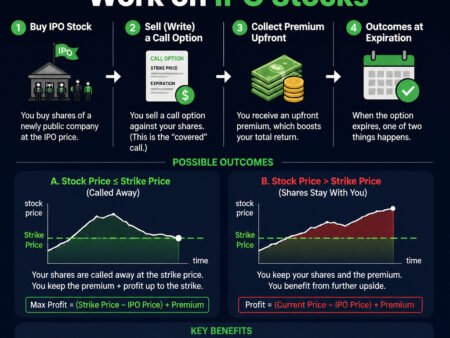
How it works: You own 100 shares of a stock. You sell a call option against those shares, collecting a premium. In exchange, you agree to sell your shares at the strike price if the stock rises above that level by expiration.
Example:
- You own 100 shares of XYZ at $50
- You sell a $55 call expiring in 30 days for $1.20 per share ($120 total)
- If XYZ stays below $55 at expiration, the option expires worthless — you keep the $120 and your shares
- If XYZ rises above $55, your shares get called away at $55 — you keep the $120 premium plus the $5 gain per share
- Your only risk: XYZ falls below your purchase price. The $120 premium partially offsets that loss
What makes it work: The covered call generates income in sideways and slightly rising markets. The key variables are strike selection (how far out of the money), expiration (how much time), and the underlying stock (how much premium it generates).
Strike selection: Most income traders target the 20–35 Delta range — roughly 65–80% probability of expiring worthless. This balances premium collected against the probability of getting called away.
Expiration: The 30–45 days to expiration (DTE) window captures the steepest part of Theta decay. Many traders sell monthly — same stock, same process, repeated every 30 days.
The covered call income math: If you own 100 shares of a $50 stock and consistently collect $1.00–$1.50 per month in covered call premium, that’s $1,200–$1,800 annually on a $5,000 position — a 24–36% annualized yield on top of any dividends or capital appreciation.
2. Cash-Secured Puts
A cash-secured put is the covered call’s counterpart — and arguably the more elegant of the two for income-focused traders who want to accumulate stock.
How it works: You sell a put option on a stock you’d be willing to own, keeping enough cash in your account to purchase the shares if assigned. You collect a premium. If the stock stays above your strike price at expiration, the option expires worthless and you keep the premium. If the stock falls below your strike, you’re assigned shares — but at an effective cost basis reduced by the premium collected.
Example:
- XYZ is trading at $50
- You sell a $47 put expiring in 30 days for $0.85 per share ($85 total)
- If XYZ stays above $47, the option expires worthless — you keep $85
- If XYZ falls below $47, you buy 100 shares at $47 — but your effective cost is $46.15 ($47 minus the $0.85 premium)
- You need $4,700 in cash reserved to secure the put
Why traders love cash-secured puts: The cash-secured put is essentially a limit buy order that pays you to wait. Instead of placing a buy order at $47 and waiting for the stock to come to you, you get paid $85 upfront. If the stock never reaches $47, you keep the premium and try again next month.
The Wheel Strategy: Many income traders combine covered calls and cash-secured puts in what’s commonly called the Wheel. The cycle works like this:
- Sell a cash-secured put on a stock you want to own
- If assigned, you now own the stock at a reduced cost basis
- Sell covered calls against the stock to generate ongoing income
- If called away, start again with cash-secured puts
- Repeat
The Wheel works best on stocks with elevated implied volatility (more premium), stable or rising fundamentals, and prices low enough to secure the put without tying up excessive capital.
3. Short Vertical Spreads (Defined-Risk Income)
Covered calls and cash-secured puts require owning the stock or holding significant cash as collateral. Short vertical spreads — also called credit spreads — offer a way to collect premium with defined, limited risk and lower capital requirements.
How it works: You sell one option and simultaneously buy another option at a different strike as protection. The premium you collect for the sold option exceeds the premium you pay for the bought option — the difference is your credit, which is your maximum profit.
Bull Put Spread Example:
- XYZ is trading at $50
- You sell the $47 put for $0.85 and buy the $44 put for $0.35
- Net credit collected: $0.50 per share ($50 per contract)
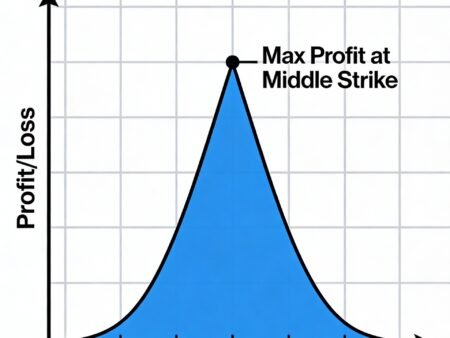
- Maximum profit: $50 (if XYZ stays above $47 at expiration)
- Maximum loss: $250 (the $3 spread width minus the $0.50 credit)
- Breakeven: $46.50
Why use spreads over naked puts? The bought option caps your maximum loss. Instead of potentially losing $4,700 if the stock goes to zero (cash-secured put scenario), your maximum loss is $250. This makes spreads far more capital-efficient and allows traders with smaller accounts to participate in income strategies that would otherwise require significant collateral.
Bear Call Spread works the same way on the call side — selling a call and buying a higher-strike call as protection, collecting a credit if the stock stays below your short strike.
Choosing the Right Underlying
Not every stock is worth running income strategies on. The best candidates share a few characteristics:
- High implied volatility relative to historical volatility. This is often measured as IV Rank or IV Percentile. When implied volatility is elevated relative to its historical range, options premiums are inflated — you collect more premium for the same risk. tastytrade and most professional platforms display IV Rank automatically.
- Liquidity. Stick to options with tight bid-ask spreads and high open interest. Illiquid options are expensive to trade in and out of, which erodes your income. Stick to large-cap stocks, major ETFs, and index products.
- Stocks you’re comfortable owning. For covered calls and cash-secured puts especially, you need to be genuinely comfortable with the underlying. A premium is worthless if you’re forced into owning a stock that collapses.
- Price range. Lower-priced stocks require less capital to run income strategies. A $20 stock requires $2,000 to sell a cash-secured put. A $500 stock requires $50,000. Many income traders build portfolios specifically around stocks in the $15–$50 range to maximize capital efficiency.
Position Sizing: The Most Important Variable
The biggest mistake new income traders make isn’t strategy selection — it’s position sizing. Collecting $200 in premium means nothing if a single bad trade costs you $2,000.
A widely used guideline from tastytrade’s research: size each position to no more than 3–5% of your portfolio. This means a single assignment or max loss event affects only a small portion of your account.
Practical sizing example:
- $25,000 portfolio
- 5% max per position = $1,250 max at risk per trade
- If selling a $45 cash-secured put, you’re committing $4,500 in collateral — that’s 18% of the portfolio in one position, which is too concentrated
- Better: sell 1 contract on a $12 stock ($1,200 collateral) or use credit spreads to cap your maximum risk within the 5% guideline
Diversification across underlyings matters as much as position sizing. Running 10 positions on the same sector means one sector selloff affects all your positions simultaneously. Spread your trades across uncorrelated underlyings — different sectors, different price behaviors.
Managing Income Trades
Opening a trade is only half the job. Knowing when and how to manage it is what separates profitable income traders from frustrated ones.
- The 50% rule. Many income traders close positions when they’ve captured 50% of the maximum profit — even if there’s time remaining on the contract. This locks in most of the gain while eliminating the tail risk of holding through expiration. tastytrade’s research supports this approach consistently.
- Rolling. If a position moves against you before expiration, you can “roll” it — closing the current position and opening a new one at a different strike or expiration. Rolling buys time and often allows you to collect additional premium while adjusting your strike. The key is rolling for a credit (collecting more premium) rather than a debit.
- Taking losses. Not every trade wins. The discipline to close a losing trade at 2x the original premium collected — before it gets worse — is one of the most important habits an income trader can build. A $100 premium collected should be closed at $200 loss maximum. This rule prevents the occasional bad trade from becoming a catastrophic one.
Income Strategy by Account Size
| Account Size | Best Starting Strategy | Why |
|---|---|---|
| Under $5,000 | Bull put spreads on low-priced stocks | Limits capital required per trade |
| $5,000–$15,000 | Cash-secured puts on $10–$30 stocks | Enough capital to diversify across 3–5 positions |
| $15,000–$50,000 | Covered calls + cash-secured puts | Full Wheel strategy becomes viable |
| $50,000+ | Full income portfolio | Diversified across 10–15 positions, multiple strategies |
Which Broker Is Best for Income Strategies?
The broker you use matters more for income strategies than for passive investing. Key considerations:
tastytrade is the most purpose-built platform for income traders. The $10 cap per leg makes high-volume selling significantly cheaper than standard per-contract pricing. The tastylive network provides daily income strategy education and live trade examples.
Charles Schwab (thinkorswim) offers the deepest analytics for modeling income trades — probability of profit, P/L graphs across time and price, and a strategy builder that lets you visualize a trade before entering it.
Fidelity is the best choice for income traders who also want to build long-term wealth alongside their options activity — zero-fee index funds, 4.5%+ APY on idle cash, and $0 exercise and assignment fees.
Robinhood and moomoo work for simple covered calls and cash-secured puts at $0 per contract, but lack the analytical depth needed for managing larger or more complex income portfolios.
See our full Best Options Brokers 2026 guide and Platform Reviews for detailed comparisons.
Common Questions About Options Income Strategies (FAQ)
How much money do I need to start selling options for income?
You can start with as little as $1,000–$2,000 using credit spreads on lower-priced stocks or ETFs. Cash-secured puts and covered calls require enough capital to own 100 shares of the underlying — so a $15 stock requires $1,500 in collateral. Most experienced income traders recommend having at least $10,000 before running a diversified income portfolio.
Is selling covered calls risky?
Covered calls are generally considered one of the lower-risk options strategies because you already own the shares. Your main risk is that the stock falls significantly — the premium collected provides only partial protection. The other risk is capping your upside if the stock rallies strongly past your strike.
What is the best stock for covered calls?
The best covered call candidates have high implied volatility (more premium), stable or rising fundamentals, good liquidity in their options chain, and a price range that doesn’t tie up excessive capital. Many income traders favor ETFs like SPY, QQQ, and sector ETFs for their liquidity and predictability.
How much income can I realistically make selling options?
This varies significantly by account size, strategy, market conditions, and underlying selection. A realistic target for a well-run income portfolio is 2–4% monthly return on capital at risk — not on total account value. That translates to 24–48% annualized on the capital you’re actively deploying, not including the capital held in reserve.
Can I sell options in an IRA?
Yes — most brokers allow defined-risk strategies like covered calls and cash-secured puts in IRAs. tastytrade notably allows spreads and even futures in retirement accounts. Check our Platform Reviews for a full breakdown of which brokers support options in IRAs.
What is the Wheel strategy?
The Wheel is a popular income strategy that cycles between selling cash-secured puts and covered calls on the same stock. When your put is assigned you own the stock — you then sell covered calls until the stock gets called away, then return to selling puts. The goal is to collect premium at every stage of the cycle while reducing your effective cost basis continuously.