
The strangle is one of the most widely used volatility strategies in retail options trading — and for good reason. It lets you profit from large price moves in either direction without requiring you to predict which way a stock will go. Compared to its close relative the straddle, the strangle costs less to enter but requires a bigger move to be profitable. Understanding when that tradeoff works in your favor is the key to using it well.
This guide covers how strangles work, when to use them, the short strangle as an income strategy, and the most common mistakes traders make.
New to options trading?
Start here: Options Trading for Beginners
What Is a Strangle in Options Trading?
A strangle is a two-leg options strategy where you simultaneously buy or sell an out-of-the-money call and an out-of-the-money put on the same underlying stock or ETF, with the same expiration date. Unlike a straddle — where both options are at-the-money — the call strike is above the current price and the put strike is below it.
This out-of-the-money placement makes the strangle cheaper than a straddle, but also means the stock needs to make a larger move before the trade reaches profitability.
Long Strangle Example:
- XYZ is trading at $50
- You buy the $54 call for $1.20 and the $46 put for $1.00
- Total cost (debit): $2.20 per share ($220 per contract pair)
- Upside breakeven: $56.20 ($54 call strike + $2.20 total premium paid)
- Downside breakeven: $43.80 ($46 put strike – $2.20 total premium paid)
- Maximum profit: Unlimited to the upside / substantial to the downside
- Maximum loss: $220 — the full premium paid if the stock closes between $46 and $54 at expiration
Compare this to a straddle on the same stock at the $50 strike costing $3.80. The strangle costs $1.60 less — but needs the stock to move to $56.20 or $43.80 to break even, versus $53.80 or $46.20 for the straddle. You’re paying less and accepting a higher movement threshold in return.
Long Strangle vs Short Strangle
Like the straddle, the strangle has two completely opposite versions with fundamentally different risk profiles.
Long Strangle (buying the strangle) You pay a debit to enter. You profit when the stock makes a large move in either direction — specifically when it moves beyond your breakeven points. Your maximum loss is the total premium paid, which occurs if the stock closes anywhere between the two strikes at expiration. Time decay works against you. Best used before anticipated large moves where you expect the actual move to exceed the market’s expected move.
Short Strangle (selling the strangle) You collect a credit to enter. You profit when the stock stays between your two strikes and implied volatility falls. Your maximum profit is the premium collected. Your risk is substantial — theoretically unlimited to the upside and large to the downside if the stock makes a significant move past either strike. Time decay works in your favor. Best used in high implied volatility environments when you expect the stock to stay relatively flat.
| Long Strangle | Short Strangle | |
|---|---|---|
| Entry | Pay a debit | Collect a credit |
| Profits when | Stock moves sharply beyond strikes | Stock stays between strikes |
| Maximum profit | Unlimited | Premium collected |
| Maximum loss | Premium paid | Substantial — move beyond strikes |
| Theta | Works against you | Works for you |
| Vega | Works for you | Works against you |
| Capital required | Premium paid | Margin — typically 10-20x premium |
| Best for | Large anticipated moves | High IV environments expecting stability |
Long Strangle vs Long Straddle: Which Is Better?
This is the most common question traders have when first encountering these two strategies. The answer depends entirely on how large you expect the move to be.
The straddle costs more but starts profiting with smaller moves — it’s the right choice when you expect a moderate to large move and want the trade to start working sooner. The strangle costs less but needs a bigger move — it’s the right choice when you expect a very large move and want to reduce your premium at risk.
| Long Straddle | Long Strangle | |
|---|---|---|
| Entry cost | Higher | Lower |
| Move required | Smaller | Larger |
| Premium at risk | More | Less |
| Breakeven distance | Closer to current price | Further from current price |
| Best when you expect | Moderate to large move | Very large move |
In practice, many experienced traders prefer the strangle for earnings plays because the lower premium reduces the damage from IV crush — the sharp drop in implied volatility that occurs after earnings are announced. Even if the stock makes a good move, IV crush can significantly erode both options’ values. A $2.20 strangle loses less to IV crush than a $3.80 straddle on the same stock.
When to Use a Long Strangle
The long strangle is a volatility play. You’re betting that the stock will make a move large enough to exceed your breakeven points — and that the actual move will be larger than what the options market has priced in.
Earnings plays are the most common use case. Before earnings, implied volatility is elevated as the market prices in uncertainty. The options chain shows an implied expected move — the range within which the options are priced to break even. A strangle bought before earnings profits if the stock moves beyond that expected range. The challenge is that options are efficiently priced around earnings, so finding consistently underpriced strangles requires skill and a specific edge.
Binary events work similarly — FDA decisions, major product launches, regulatory rulings, merger announcements. Any event where the outcome is uncertain and the magnitude of the market reaction could be significantly larger than expected is a candidate for a long strangle.
Technical breakouts are another setup. If a stock has been consolidating in a tight range for weeks and technical analysis suggests a major breakout is imminent in either direction, a strangle positioned around the breakout range can profit from the move regardless of direction.
When NOT to use a long strangle:
- When implied volatility is already elevated — you’ll overpay for both options
- Far from any known catalyst — Theta will erode both options before a significant move develops
- On low-volatility, slow-moving stocks where large moves are structurally unlikely
- When the expected move already prices in an unusually large anticipated move
The Short Strangle as an Income Strategy
While the long strangle is a directional volatility play, the short strangle is fundamentally an income strategy — and it’s one of the most widely used by professional options traders.
When you sell a strangle, you collect premium upfront and profit as long as the stock stays between your two strikes through expiration. Time decay works in your favor, and a drop in implied volatility after you enter the trade accelerates your profit.
Short Strangle Example:
- XYZ is trading at $50 with elevated implied volatility
- You sell the $54 call for $1.20 and the $46 put for $1.00
- Total credit collected: $2.20 per share ($220 per contract pair)
- Maximum profit: $220 — if XYZ closes between $46 and $54 at expiration
- Upside breakeven: $56.20
- Downside breakeven: $43.80
- Risk: Substantial if XYZ moves significantly beyond either breakeven
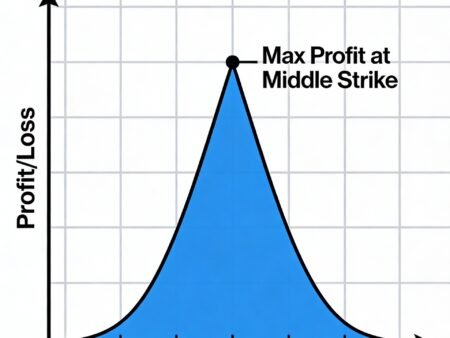
The short strangle is preferred over the short straddle by most income traders because the wider strike placement creates more room for the stock to move without threatening the position. This buffer — the range between the strikes — is sometimes called the “tent” or the profit zone. The wider the tent, the more comfortable the trade, but the less premium you collect.
Why short strangles are popular in high-IV environments: When implied volatility is elevated — often measured by IV Rank or IV Percentile — options premiums are inflated relative to what the stock typically moves. Selling in a high-IV environment means collecting more premium for the same risk. As IV contracts back toward its historical average, the value of the options you sold falls — which is your profit.
tastytrade’s research — based on tens of thousands of trades — has consistently shown that selling options in high IV rank environments (above 50th percentile) produces better expected returns than selling in low IV environments. The short strangle in a high-IV-rank underlying is one of the most data-supported income trades in retail options trading.
Managing a Short Strangle
Short strangles require active management — they’re not set-and-forget trades.
The 50% rule. Many income traders close short strangles when they’ve captured 50% of the maximum profit — even if expiration is still weeks away. On a $220 credit strangle, that means closing the position when it can be bought back for $110. Closing at 50% locks in most of the gain while eliminating the tail risk of holding through expiration where pin risk and rapid moves become more dangerous.
Rolling untested sides. As the stock moves toward one of your strikes, the threatened side becomes “tested.” The untested side — the strike the stock is moving away from — can often be rolled closer to the current price to collect additional premium and improve your breakeven. This is called rolling the untested side and is a standard short strangle management technique.
Rolling the position. If a short strangle is threatened — meaning the stock is approaching or has breached one of your strikes — you can roll the entire position to a new expiration, collecting additional premium in the process. Rolling buys time for the stock to settle back within your range and increases your total credit, which improves your breakeven.
Taking a loss. Not every short strangle works. A widely used rule is to close a short strangle if the loss reaches 2x the original credit collected. A $220 credit strangle would be closed at a $440 loss. This rule prevents a single bad trade from overwhelming a month’s worth of successful trades.
How to Size a Strangle
Position sizing is critical for short strangles because the risk is larger than the premium collected. Margin requirements for naked short options can be 10-20x the premium — a $220 credit strangle might require $2,000-$4,000 in margin.
A practical approach is to size each strangle position so the maximum realistic loss — not the theoretical maximum, but a 2x-premium-collected loss — represents no more than 3-5% of your portfolio. On a $25,000 account that’s $750-$1,250 per position.
For long strangles, size so the total premium at risk — your maximum loss — is no more than 2-3% of your portfolio per position. This ensures that a straddle that goes completely wrong doesn’t significantly impact your overall account.
Diversification applies here too. Running multiple strangles on correlated underlyings in the same sector creates concentrated risk. If the sector sells off hard, all your short strangles get tested simultaneously. Spread exposure across different sectors and price behaviors.
Who Should Use the Strangle Strategy
Long strangles are appropriate for intermediate traders who understand implied volatility, the expected move concept, and IV crush. The mechanics are simple, but using them profitably requires a genuine edge — specifically, identifying situations where the market is underpricing the magnitude of a move.
Short strangles are appropriate for intermediate to advanced income traders who understand margin requirements, have a clear management plan, and are comfortable with trades that can occasionally move against them significantly. The short strangle is not a beginner strategy — the risk profile requires experience to manage well.
For traders new to options, starting with defined-risk strategies like bull put spreads or iron condors is a better first step. Both provide income in similar environments with capped downside — making them more forgiving while you develop the judgment needed to manage undefined-risk strategies like the short strangle.
Frequently Asked Questions About the Strangle Strategy
What is a strangle in options trading?
A strangle is an options strategy where you buy or sell an out-of-the-money call and an out-of-the-money put on the same underlying, with the same expiration date. A long strangle profits from large moves in either direction. A short strangle profits when the stock stays between the two strikes and implied volatility falls.
What is the difference between a straddle and a strangle?
A straddle uses at-the-money options for both legs — it costs more but profits from smaller moves. A strangle uses out-of-the-money options — it costs less but requires a larger move to be profitable. Both strategies profit from large moves in either direction, but the strangle provides a wider profit zone on the short side and a lower premium at risk on the long side.
What is the maximum loss on a long strangle?
The maximum loss on a long strangle is the total premium paid for both options. This occurs if the stock closes anywhere between the two strike prices at expiration — both the call and put expire worthless and you lose the entire premium paid.
Is the short strangle safe?
The short strangle is not a safe strategy in the conventional sense — it carries substantial risk if the stock makes a large move past either strike. The risk is undefined to the upside and large to the downside. It is best suited for experienced traders with clear position sizing rules, active management plans, and a genuine understanding of the margin requirements involved.
When is the best time to sell a strangle?
The best time to sell a strangle is when implied volatility is elevated relative to its historical range — typically measured as IV Rank above 50%. High implied volatility means inflated option premiums, and selling in a high-IV environment means you collect more premium for the same amount of risk. As IV contracts back to normal, the value of your sold options falls — which is your profit.
How does IV crush affect a long strangle?
IV crush — the sharp drop in implied volatility after an earnings announcement or major catalyst — reduces the value of both the call and the put in a long strangle. Even if the stock moves in your favor, severe IV crush can significantly reduce your profit or turn a winning directional move into a losing trade. This is why the timing of entry is critical for long strangles around earnings.
What is the difference between a strangle and an iron condor?
An iron condor is essentially a short strangle with protective options purchased on both sides to cap the maximum loss. The short strangle collects more premium and has higher profit potential, but the iron condor defines the maximum loss making it more capital-efficient and less risky. Most beginning income traders start with iron condors before graduating to short strangles as their experience grows.
Can I sell a strangle for monthly income?
Yes — the short strangle is one of the most widely used monthly income strategies among professional and retail traders. Selling a strangle on a high-IV underlying in the 30-45 days to expiration window, managing at 50% of maximum profit, and sizing appropriately across 5-10 uncorrelated positions is a systematic income approach used by many experienced traders.