
A straddle is one of the most powerful — and most misunderstood — options strategies available to retail traders. Unlike directional strategies that require you to predict whether a stock goes up or down, a straddle profits from movement itself. Get the timing right and it doesn’t matter which way the stock moves. Get it wrong, and time decay quietly bleeds the position to zero.
This guide covers exactly how straddles work, when to use them, how to size and manage them, and the common mistakes that cost traders money.
New to options trading?
Start here: Options Trading for Beginners
What Is a Straddle in Options Trading?
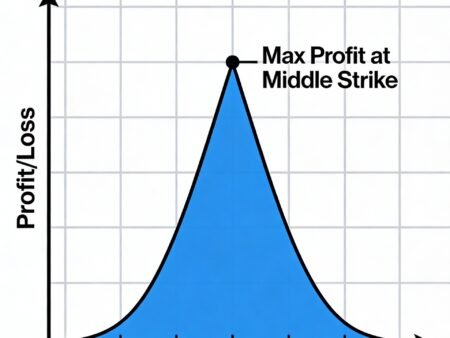
A straddle is a two-leg options strategy where you simultaneously buy a call and a put at the same strike price, on the same underlying stock or ETF, with the same expiration date. Both options are typically bought at-the-money — meaning the strike price is as close as possible to the current stock price.
The logic is straightforward: if the stock makes a big move in either direction, one of your options profits significantly while the other expires worthless or near worthless. As long as the move is large enough to cover the cost of both options, the trade is profitable.
Long Straddle Example:
- XYZ is trading at $50
- You buy the $50 call for $2.00 and the $50 put for $1.80
- Total cost (debit): $3.80 per share ($380 per contract pair)
- Upside breakeven: $53.80 ($50 strike + $3.80 total premium paid)
- Downside breakeven: $46.20 ($50 strike – $3.80 total premium paid)
- Maximum profit: Unlimited to the upside / limited to $46.20 to the downside (stock can’t go below zero)
- Maximum loss: $380 — the full premium paid if the stock closes exactly at $50 at expiration
The straddle requires the stock to move — it doesn’t matter which direction. If XYZ moves to $56 by expiration, your call is worth $6 and your put expires worthless. Your profit is $6 – $3.80 = $2.20 per share, or $220 on the pair. If XYZ drops to $44, your put is worth $6 and your call expires worthless — same profit.
Long Straddle vs Short Straddle
There are two sides to every straddle — and they have completely opposite risk profiles.
- Long Straddle (buying the straddle) You pay a debit to enter. You profit from large moves in either direction. Your maximum loss is the premium paid. Time decay (Theta) works against you — every day without a large move erodes your position value. Best used before anticipated large moves like earnings reports or major catalysts.
- Short Straddle (selling the straddle) You collect a credit to enter. You profit if the stock stays relatively flat and implied volatility drops. Your maximum profit is the premium collected. Your risk is theoretically unlimited to the upside and substantial to the downside. Time decay works in your favor. Best used when implied volatility is elevated and expected to fall.
| Entry | Pay a debit | Collect a credit |
| Profits when | Stock moves sharply | Stock stays flat |
| Maximum profit | Unlimited | Premium collected |
| Maximum loss | Premium paid | Theoretically unlimited |
| Theta | Works against you | Works for you |
| Vega | Works for you | Works against you |
| Best used | Before large catalysts | After IV spikes |
For most retail traders, the long straddle is the more common entry point. Short straddles carry substantial risk and are generally more appropriate for experienced traders with defined risk management processes.
When to Use a Long Straddle
The long straddle is a volatility play. You’re betting that implied volatility is understating how much the stock will actually move. The most common setup is trading a straddle into a known catalyst — most often an earnings announcement.
Earnings plays are the classic straddle setup. Before earnings, implied volatility spikes as the market prices in uncertainty. After earnings, the stock makes its move — sometimes large, sometimes muted — and implied volatility collapses in a phenomenon called IV crush. A well-timed straddle bought before earnings can profit significantly if the stock moves more than the market expected.
The critical concept here is the expected move. Most options platforms display the expected move for earnings — the range the options market is pricing in for the stock. A $50 stock might have an expected move of ±$4, meaning the straddle is priced to break even if the stock moves exactly $4 in either direction. To profit, the stock needs to move more than $4. If it only moves $2, even in the right direction, the straddle loses money.
Non-earnings setups include FDA decisions, major product launches, legal verdicts, macro data releases, and any event where the outcome is binary and the market’s priced-in move may underestimate reality. The same logic applies — you need the actual move to exceed the expected move.
When NOT to use a long straddle:
- After implied volatility has already spiked — you’ll overpay for the options
- On slow-moving, low-volatility stocks where large moves are unlikely
- Far from any known catalyst — Theta will erode the position before the move materializes
- When the expected move already reflects a large anticipated move — you need the market to be wrong about magnitude
IV Crush: The Straddle’s Biggest Enemy
IV crush is the single most important concept for any trader considering a long straddle into earnings.
Before earnings, implied volatility is elevated because the market is uncertain about the outcome. Once earnings are announced — regardless of whether the news is good or bad — that uncertainty is resolved. Implied volatility drops sharply, sometimes by 40-60% in a single session. This collapse in IV destroys the value of both options, even if the stock moves significantly.
IV Crush Example:
- XYZ is at $50 before earnings
- You pay $4.00 for a straddle with IV at 80%
- Earnings are released — XYZ moves to $55 (a $5 move, above breakeven)
- But IV collapses from 80% to 35% post-earnings
- Your call, despite being $5 in the money, is now worth only $5.20 after IV crush strips out the extrinsic value
- Your put is nearly worthless
- Total position value: approximately $5.20 — a $1.20 profit instead of the $1.00 expected from a clean $5 move
The takeaway: even when the stock moves in your favor, IV crush can dramatically reduce your profit or even turn a winning directional move into a losing trade. Experienced straddle traders account for expected IV crush when evaluating whether a straddle is fairly priced.
How to Size a Straddle
Position sizing matters more for long straddles than almost any other strategy because the maximum loss is the entire premium paid — and straddle premiums can be substantial for high-volatility stocks.
A practical approach: size each straddle so the maximum loss represents no more than 2-3% of your trading capital. On a $25,000 account, that’s $500-$750 per straddle position. For a straddle costing $4.00 per share, that’s one contract pair — perfectly appropriate sizing.
Avoid concentrating straddle exposure around the same event. Running five earnings straddles in the same week creates correlated risk — if IV crush is broader than expected across the market, all five positions suffer simultaneously.
Managing a Long Straddle
Take profits quickly when the move happens. After a large earnings move, the trade may have generated most of its potential profit within the first hour of trading. There’s no rule requiring you to hold through expiration — close the winner when the profit is there.
Set a max loss exit. If the stock doesn’t move meaningfully and IV drops, the straddle loses value quickly. Many traders set a rule to close the position if it loses 50% of its cost — a $380 straddle would be closed at $190 regardless of time remaining. This prevents a full premium loss on a position that clearly isn’t working.
Avoid holding into expiration. A straddle that hasn’t moved in your favor becomes more dangerous as expiration approaches — both options lose extrinsic value rapidly, and you’re left with little time for the stock to make the necessary move.
The Straddle vs The Strangle
The straddle’s close relative is the strangle — a two-leg strategy where you buy an out-of-the-money call and an out-of-the-money put instead of both at-the-money options.
| Straddle | Strangle | |
|---|---|---|
| Strike placement | Both at-the-money | Call above, put below current price |
| Cost | Higher | Lower |
| Move required to profit | Smaller | Larger |
| Sensitivity to small moves | Higher | Lower |
| Best for | Moderate expected moves | Very large expected moves |
The strangle costs less because both options are out-of-the-money — but requires a larger move to reach profitability. The straddle costs more but starts profiting sooner if the stock moves in either direction. Which is better depends on how large you expect the move to be relative to the premium you’re paying.
Who Should Use the Straddle Strategy
The long straddle is best suited for intermediate options traders who understand implied volatility, IV crush, and expected moves — and who have identified a specific catalyst where the market may be underpricing the magnitude of a move.
It is not a beginner strategy. The mechanics are straightforward but the execution requires understanding when the straddle is fairly priced versus overpriced — a judgment that requires familiarity with how options are valued and how IV behaves around events.
For income-focused traders whose primary strategy is selling options, the short straddle (or more commonly, the strangle) is the relevant version — collecting premium in high-IV environments and managing the position as IV contracts and the stock stays within range.
Frequently Asked Questions About the Straddle Strategy
What is a straddle in options trading?
A straddle is an options strategy where you buy both a call and a put at the same strike price and expiration date on the same underlying. A long straddle profits when the stock makes a large move in either direction. A short straddle profits when the stock stays flat and implied volatility falls.
When should I use a straddle?
Use a long straddle when you expect a large price move but don’t know the direction — most commonly before earnings announcements or major binary events. Use a short straddle when implied volatility is elevated and you expect the stock to remain relatively flat through expiration.
What is the maximum loss on a long straddle?
The maximum loss on a long straddle is the total premium paid for both options — the call premium plus the put premium. This maximum loss occurs if the stock closes exactly at the strike price at expiration, causing both options to expire worthless.
How does IV crush affect a straddle?
IV crush is the sharp drop in implied volatility that occurs after an earnings announcement or major catalyst. Because options are priced partly based on implied volatility, a collapse in IV reduces the value of both the call and the put — often significantly. A stock can move in your favor on earnings and the straddle can still lose money if IV crush is severe enough.
What is the difference between a straddle and a strangle?
A straddle uses at-the-money options for both the call and put — it costs more but profits from smaller moves. A strangle uses out-of-the-money options — it costs less but requires a larger move to be profitable. Both strategies profit from large moves in either direction.
Is the straddle strategy profitable?
A long straddle is profitable when the stock’s actual move exceeds the expected move priced into the options. The challenge is that options are generally efficiently priced around known events like earnings — the expected move accurately reflects the average outcome over time. Straddle buyers need to identify situations where the market is systematically underpricing the magnitude of moves, which requires skill and experience.
Can I sell a straddle for income?
Yes — a short straddle collects premium in exchange for taking on the obligation to deliver shares if the stock moves significantly in either direction. Short straddles profit when the stock stays flat and IV falls, but carry substantial risk if the stock makes a large move. Most income traders prefer short strangles over short straddles because the wider strike placement provides more buffer before the trade goes against them.